
IB Paper 2 - Topic 10: 20th century authoritarian states
This topic focuses on exploring the conditions that facilitated the rise of authoritarian states in the 20th century, as well as the methods used by parties and leaders to take and maintain power. The topic explores the emergence, consolidation and maintenance of power, including the impact of the leaders' policies, both domestic and foreign, upon the maintenance of power. Examination questions for this topic will expect students to make reference to specific authoritarian states in their responses, and some examination questions will require discussion of states from more than one region of the world. In order for students to be able to make meaningful comparisons across all aspects of the prescribed content, it is recommended that a minimum of three authoritarian states should be studied.
|
|
There are three themes to cover in 20th century authoritarian states:
1. Emergence, 2. Consolidation and maintenance 3. Aims and results of policies. 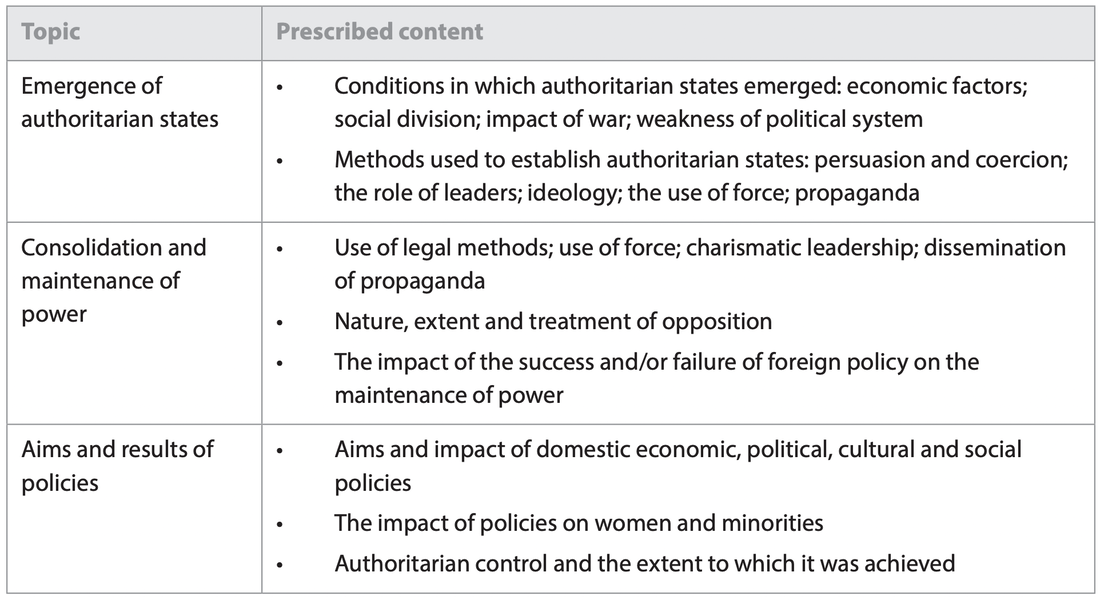
|
Case studies


Comparative analysis
