• Home
  • Year 9
    • Unit 1 - Bronze Age Greece >
      • Lesson 1 - Minoa
      • Lesson 2 - Myths
      • Lesson 3 - Atlantis
      • Lesson 4 - The Mycenaeans
      • Lesson 5 - Troy
      • End of Unit Test
    • Unit 2 - Classical Greece >
      • Lesson 1 - Archaic Period
      • Lesson 2 - Olympics
      • Lesson 3 - Athens
      • Lesson 4 - Democracy
      • Lesson 5 - Sparta
      • Lesson 6 - Greek Gods
      • Lesson 7 - Greek Legacy
      • End of Unit Test - 2
    • Unit 3 - Roman Republic >
      • Lesson 1 - Foundation
      • Lesson 2 - Republic
      • Lesson 3 - Hannibal
      • Lesson 4 - Julius Caesar
      • Lesson 5 - Rome
    • Unit 4 - Roman Empire >
      • Lesson 1 - Empire
      • Lesson 2 - Roman Nyon
      • Lesson 3 - Pompeii
      • Lesson 4 - Rise and Fall
      • Lesson 5 - Legacy
    • Unit 5 - The early Middle Ages >
      • Lesson 1 - Middle Ages?
      • Lesson 2 - Christianity
      • Lesson 3 - Monasteries
      • Lesson 4 - Justinian
      • Lesson 5 - Islam
      • Lesson 6 - Vikings
  • Year 11
    • Warfare - A study through time >
      • Lesson 1 - Introduction >
        • Warfare - Timeline activity >
          • Students' Timelines 2020
      • Lesson 2 - Medieval >
        • Case Study - 1066 - Battle of Hastings
      • Lesson 3 - Crusades >
        • Case Study - 1271 - Krak des Chevaliers
      • Lesson 4 - New World >
        • Case Study - 1532 - Battle of Cajamarca
      • Lesson 5 - Religion >
        • Case Study - 1572 - St. Bartholomew's Day Massacre
      • Lesson 6 - Napoleon >
        • Case Study - 1796 - Battle of Lodi
      • Lesson 7 - Industrial >
        • Case Study - 1859 - Battle of Solferino
      • Lesson 8 - World War 1 >
        • Case Study - 1915 - The Battle of Ypres
      • Lesson 9 - 1930s >
        • Case Study - 1937 - Nanjing Massacre
      • Lesson 10 - Vietnam >
        • Case Study - 1968 - Tet Offensive
    • Matu 1 - The American Revolution >
      • Lesson 1 - The Scientific Revolution
      • Lesson 2 - The Enlightenment
      • Lesson 3 - Enlightened Monarchs
      • Lesson 4 - Colonising America
      • Lesson 5 - Thirteen Colonies
      • Lesson 6 - Boston Massacre? >
        • Boston Massacre - The Play
      • Lesson 7 - Short-term causes
      • Lesson 8 - Why Britain lost
      • Lesson 9 - Consequences
      • Lesson 10 - How revolutionary?
    • Matu 2 - The French Revolution >
      • Lesson 1 - Introduction
      • Lesson 2 - Causes SE
      • Lesson 3 - Causes CP
      • Lesson 4 - Short term causes
      • Lesson 5 - The Bastille
      • Lesson 6 - 1789-91
      • Lesson 7 - 1793 Execution
      • Lesson 8 - The Terror
    • Matu 3 - Switzerland and Napoleon >
      • Lesson 1 - Ancien Regime
      • Lesson 2 - 1789
      • Lesson 3 - Napoleon's Rise
      • Lesson 4 - Napoleon in Art
      • Lesson 5 - Napoleon's Reforms
      • Lesson 6 - Switzerland 1798-1815
      • Lesson 7 - Napoleon's Europe
      • Lesson 8 - Napoleon: Hero or villain
  • S1 S2
    • Matu 4 - Industrial Revolution >
      • Lesson 1 - Why was Britain First?
      • Lesson 2 - Economics - Agriculture
      • Lesson 3 - Economics - Industry
      • Lesson 4 - Transport
      • Lesson 5 - Social Impact
      • Lesson 6 - Cultural Impact
      • Lesson 7 - Political Impact
      • Lesson 8 - Switzerland
    • Matu 5 - Nationalism >
      • Lesson 1 - Impact of French Revolution
      • Lesson 2 - Napoleon and Vienna
      • Lesson 3 - 1815-48 - Age of Revolution
      • Lesson 4 - Italian Unification - 1830-48
      • Lesson 5 - Switzerland 1815-48
      • Lesson 6 - Italian Unification - 1848-70
      • Lesson 7 - German Unification - 1848-71
      • Lesson 8 - The German Empire
    • Matu 6 - New Imperialism >
      • Lesson 1 - New Imperialism?
      • Lesson 2 - Africa
      • Lesson 3 - Congo
      • Lesson 4 - China
      • Lesson 5 - Japan
      • Lesson 6 - Legacy
      • Jared Diamond thesis
    • Matu 7 - World War 1 >
      • Lesson 1 - Introduction
      • Lesson 2 - Causes
      • Lesson 3 - 1914
      • Lesson 4 - Expectations
      • Lesson 5 - Reality
      • Lesson 6 - Total War
      • Lesson 7 - Switzerland
      • Lesson 8 - Defeat
      • Lesson 9 - Peace 1919
    • Matu 8 - Russian Revolutions >
      • Lesson 1 - Russia before 1917 >
        • Tim Marshall - Russia
      • Lesson 2 - 1905 Revolution
      • Lesson 3 - February Revolution
      • Lesson 4 - Marxism
      • Lesson 5 - Lenin
      • Lesson 6 - The Bolsheviks
      • Lesson 7 - 1917-18
      • Lesson 8 - Civil War
    • Matu 9 - USA 1919-41 >
      • Lesson 1 - 1920s boom
      • Lesson 2 - Roaring 20s?
      • Lesson 3 - Crash
      • Lesson 4 - 1932 Election
      • Lesson 5 - New Deal
      • Lesson 6 - Judging the New Deal
    • Matu 10 - Totalitarian States >
      • Lesson 1 - Modern Authoritarianism >
        • Is Trump's USA authoritarian?
      • Lesson 2 - Fascism
      • Lesson 3 - Mussolini - Rise to Power
      • Lesson 4 - Mussolini - Consolidation of Power
      • Lesson 5 - Mussolini - Aims and policies
      • Lesson 6 - Research presentations >
        • Hitler - Research presentations
        • Stalin- Research presentations
      • Lesson 7 - Hitler - Germany 1933-45 >
        • Hitler - Rise to Power
        • Hitler - Consolidation of Power
        • Hitler - Aims and policies
      • Lesson 8 - Stalin - USSR 1924-41 >
        • Stalin - Rise to Power
        • Stalin - Consolidation of Power
        • Stalin - Aims and policies
    • Exams and Revision
  • S3
    • Matu 11 - World War II >
      • Lesson 1 - WW1
      • Lesson 2 - LoN
      • Lesson 3 - Hitler
      • Lesson 4 - Appeasement
      • Lesson 5 - 1939-40
      • Lesson 6 - Japan
      • Lesson 7 - Russia
      • Lesson 8 - Total War
      • Lesson 9 - Defeat
      • Lesson 10 - Switzerland
    • Matu 12 - The Cold War >
      • Lesson 1 - Causes
      • Lesson 2 - Berlin
      • Lesson 3 - 1950s
      • Lesson 4 - 1960s
      • Lesson 5 - 1970s
      • Lesson 6 - 1980s
    • Matu 13 - Decolonisation and the Third World >
      • Lesson 1 - Factors
      • Lesson 2 - Case studies
      • Lesson 3 - Consequences
    • Matu 14 - Switzerland >
      • Swiss Politics
      • Swiss History
    • Exams and Revision
  • IB History
    • IB History - Paper 1 >
      • IB History - Paper 1 - Content
      • IB History - Paper 1 - Past paper questions >
        • Question 1a
        • Question 1b
        • Question 2
        • Question 3
        • Question 4
      • IB History - Paper 1 - Skills
    • IB History - Paper 2 >
      • IB History - Paper 2 past paper questions
      • IB History - 7. Industrialization >
        • IB History - Past paper questions - Industrialization
        • IB History - First and Second Industrial Revolution
        • IB History - Steven Johnson
        • Activity 1
      • IB History - 8. Independence movements >
        • IB History - Past paper questions - Independence movements
        • IB History - Revision Template - Independence movements >
          • IB History - Independence movements - Theme 1 - Origin and rise
          • IB History - Independence movements - Theme 2 - Methods
      • IB History - 10. Authoritarian States >
        • IB History - Emergence of authoritarian states
        • IB History - Consolidation and maintenance
        • IB History - Aims and policies
        • IB History - Past paper questions - Authoritarian states
        • IB History - Revision Template - Authoritarian states >
          • Hitler - Germany and Castro - Cuba - A comparative analysis (Part 1)
          • Hitler - Germany and Castro - Cuba - A comparative analysis (Part 2)
          • Hitler - Germany and Castro - Cuba - A comparative analysis (Part 3)
      • IB History - 11. Warfare >
        • IB History - Past paper questions - Warfare
      • IB History - 12. Cold War >
        • IB History - Past paper questions - Cold War
        • IB History - Revision essay plans - Cold War >
          • Cold War - 1943-49 - Rivalry, mistrust and accord
          • Cold War - 1947-79 - Rivalry, mistrust and accord
          • Cold War - 1980-91 - Rivalry, mistrust and accord
          • Cold War - Leaders, nations and Cold War crises.
    • IB History - IA - Internal Assessment
  • TOK
    • Critical Thinking >
      • Lesson 1 - Thinking >
        • Lesson 1 - Test
      • Lesson 2 - Language
      • Lesson 3 - Senses
      • Lesson 4 - Reason
      • Lesson 5 - Emotion
      • Assessment >
        • Movie perception test
        • Complete film
        • Student Films 2021
    • Core theme - Knowledge and the knower >
      • Knowledge framework
    • Areas of Knowledge >
      • History >
        • Scope in history
        • Method and perspective in history
        • Ethics in history
      • Human Science >
        • Scope in human science
        • Method and perspectives in human science
        • Ethics in human science
      • Natural Science >
        • Scope in natural science
        • Method and perspectives in natural science
        • Ethics in human science
      • Maths >
        • Scope in maths
        • Method and perspectives in maths
        • Ethics in maths
      • Arts >
        • Scope in the arts
        • Method and perspectives in arts
        • Ethics in the arts
      • Politics >
        • Scope in politics
        • Method and perspectives in politics
        • Ethics in politics
      • Technology >
        • Scope in technology
        • Method and perspectives in politics
        • Ethics in technology
      • Language >
        • Scope in language
        • Method and perspectives in language
        • Ethics in technology
    • Assessment >
      • TOK Exhibition >
        • TOK Exhibition 2023
        • TOK Exhibition 2024
        • TOK Exhibition 2025
      • Essay
  • Film Workshop
  • About
International School History
  • Home
  • Year 9
    • Unit 1 - Bronze Age Greece >
      • Lesson 1 - Minoa
      • Lesson 2 - Myths
      • Lesson 3 - Atlantis
      • Lesson 4 - The Mycenaeans
      • Lesson 5 - Troy
      • End of Unit Test
    • Unit 2 - Classical Greece >
      • Lesson 1 - Archaic Period
      • Lesson 2 - Olympics
      • Lesson 3 - Athens
      • Lesson 4 - Democracy
      • Lesson 5 - Sparta
      • Lesson 6 - Greek Gods
      • Lesson 7 - Greek Legacy
      • End of Unit Test - 2
    • Unit 3 - Roman Republic >
      • Lesson 1 - Foundation
      • Lesson 2 - Republic
      • Lesson 3 - Hannibal
      • Lesson 4 - Julius Caesar
      • Lesson 5 - Rome
    • Unit 4 - Roman Empire >
      • Lesson 1 - Empire
      • Lesson 2 - Roman Nyon
      • Lesson 3 - Pompeii
      • Lesson 4 - Rise and Fall
      • Lesson 5 - Legacy
    • Unit 5 - The early Middle Ages >
      • Lesson 1 - Middle Ages?
      • Lesson 2 - Christianity
      • Lesson 3 - Monasteries
      • Lesson 4 - Justinian
      • Lesson 5 - Islam
      • Lesson 6 - Vikings
  • Year 11
    • Warfare - A study through time >
      • Lesson 1 - Introduction >
        • Warfare - Timeline activity >
          • Students' Timelines 2020
      • Lesson 2 - Medieval >
        • Case Study - 1066 - Battle of Hastings
      • Lesson 3 - Crusades >
        • Case Study - 1271 - Krak des Chevaliers
      • Lesson 4 - New World >
        • Case Study - 1532 - Battle of Cajamarca
      • Lesson 5 - Religion >
        • Case Study - 1572 - St. Bartholomew's Day Massacre
      • Lesson 6 - Napoleon >
        • Case Study - 1796 - Battle of Lodi
      • Lesson 7 - Industrial >
        • Case Study - 1859 - Battle of Solferino
      • Lesson 8 - World War 1 >
        • Case Study - 1915 - The Battle of Ypres
      • Lesson 9 - 1930s >
        • Case Study - 1937 - Nanjing Massacre
      • Lesson 10 - Vietnam >
        • Case Study - 1968 - Tet Offensive
    • Matu 1 - The American Revolution >
      • Lesson 1 - The Scientific Revolution
      • Lesson 2 - The Enlightenment
      • Lesson 3 - Enlightened Monarchs
      • Lesson 4 - Colonising America
      • Lesson 5 - Thirteen Colonies
      • Lesson 6 - Boston Massacre? >
        • Boston Massacre - The Play
      • Lesson 7 - Short-term causes
      • Lesson 8 - Why Britain lost
      • Lesson 9 - Consequences
      • Lesson 10 - How revolutionary?
    • Matu 2 - The French Revolution >
      • Lesson 1 - Introduction
      • Lesson 2 - Causes SE
      • Lesson 3 - Causes CP
      • Lesson 4 - Short term causes
      • Lesson 5 - The Bastille
      • Lesson 6 - 1789-91
      • Lesson 7 - 1793 Execution
      • Lesson 8 - The Terror
    • Matu 3 - Switzerland and Napoleon >
      • Lesson 1 - Ancien Regime
      • Lesson 2 - 1789
      • Lesson 3 - Napoleon's Rise
      • Lesson 4 - Napoleon in Art
      • Lesson 5 - Napoleon's Reforms
      • Lesson 6 - Switzerland 1798-1815
      • Lesson 7 - Napoleon's Europe
      • Lesson 8 - Napoleon: Hero or villain
  • S1 S2
    • Matu 4 - Industrial Revolution >
      • Lesson 1 - Why was Britain First?
      • Lesson 2 - Economics - Agriculture
      • Lesson 3 - Economics - Industry
      • Lesson 4 - Transport
      • Lesson 5 - Social Impact
      • Lesson 6 - Cultural Impact
      • Lesson 7 - Political Impact
      • Lesson 8 - Switzerland
    • Matu 5 - Nationalism >
      • Lesson 1 - Impact of French Revolution
      • Lesson 2 - Napoleon and Vienna
      • Lesson 3 - 1815-48 - Age of Revolution
      • Lesson 4 - Italian Unification - 1830-48
      • Lesson 5 - Switzerland 1815-48
      • Lesson 6 - Italian Unification - 1848-70
      • Lesson 7 - German Unification - 1848-71
      • Lesson 8 - The German Empire
    • Matu 6 - New Imperialism >
      • Lesson 1 - New Imperialism?
      • Lesson 2 - Africa
      • Lesson 3 - Congo
      • Lesson 4 - China
      • Lesson 5 - Japan
      • Lesson 6 - Legacy
      • Jared Diamond thesis
    • Matu 7 - World War 1 >
      • Lesson 1 - Introduction
      • Lesson 2 - Causes
      • Lesson 3 - 1914
      • Lesson 4 - Expectations
      • Lesson 5 - Reality
      • Lesson 6 - Total War
      • Lesson 7 - Switzerland
      • Lesson 8 - Defeat
      • Lesson 9 - Peace 1919
    • Matu 8 - Russian Revolutions >
      • Lesson 1 - Russia before 1917 >
        • Tim Marshall - Russia
      • Lesson 2 - 1905 Revolution
      • Lesson 3 - February Revolution
      • Lesson 4 - Marxism
      • Lesson 5 - Lenin
      • Lesson 6 - The Bolsheviks
      • Lesson 7 - 1917-18
      • Lesson 8 - Civil War
    • Matu 9 - USA 1919-41 >
      • Lesson 1 - 1920s boom
      • Lesson 2 - Roaring 20s?
      • Lesson 3 - Crash
      • Lesson 4 - 1932 Election
      • Lesson 5 - New Deal
      • Lesson 6 - Judging the New Deal
    • Matu 10 - Totalitarian States >
      • Lesson 1 - Modern Authoritarianism >
        • Is Trump's USA authoritarian?
      • Lesson 2 - Fascism
      • Lesson 3 - Mussolini - Rise to Power
      • Lesson 4 - Mussolini - Consolidation of Power
      • Lesson 5 - Mussolini - Aims and policies
      • Lesson 6 - Research presentations >
        • Hitler - Research presentations
        • Stalin- Research presentations
      • Lesson 7 - Hitler - Germany 1933-45 >
        • Hitler - Rise to Power
        • Hitler - Consolidation of Power
        • Hitler - Aims and policies
      • Lesson 8 - Stalin - USSR 1924-41 >
        • Stalin - Rise to Power
        • Stalin - Consolidation of Power
        • Stalin - Aims and policies
    • Exams and Revision
  • S3
    • Matu 11 - World War II >
      • Lesson 1 - WW1
      • Lesson 2 - LoN
      • Lesson 3 - Hitler
      • Lesson 4 - Appeasement
      • Lesson 5 - 1939-40
      • Lesson 6 - Japan
      • Lesson 7 - Russia
      • Lesson 8 - Total War
      • Lesson 9 - Defeat
      • Lesson 10 - Switzerland
    • Matu 12 - The Cold War >
      • Lesson 1 - Causes
      • Lesson 2 - Berlin
      • Lesson 3 - 1950s
      • Lesson 4 - 1960s
      • Lesson 5 - 1970s
      • Lesson 6 - 1980s
    • Matu 13 - Decolonisation and the Third World >
      • Lesson 1 - Factors
      • Lesson 2 - Case studies
      • Lesson 3 - Consequences
    • Matu 14 - Switzerland >
      • Swiss Politics
      • Swiss History
    • Exams and Revision
  • IB History
    • IB History - Paper 1 >
      • IB History - Paper 1 - Content
      • IB History - Paper 1 - Past paper questions >
        • Question 1a
        • Question 1b
        • Question 2
        • Question 3
        • Question 4
      • IB History - Paper 1 - Skills
    • IB History - Paper 2 >
      • IB History - Paper 2 past paper questions
      • IB History - 7. Industrialization >
        • IB History - Past paper questions - Industrialization
        • IB History - First and Second Industrial Revolution
        • IB History - Steven Johnson
        • Activity 1
      • IB History - 8. Independence movements >
        • IB History - Past paper questions - Independence movements
        • IB History - Revision Template - Independence movements >
          • IB History - Independence movements - Theme 1 - Origin and rise
          • IB History - Independence movements - Theme 2 - Methods
      • IB History - 10. Authoritarian States >
        • IB History - Emergence of authoritarian states
        • IB History - Consolidation and maintenance
        • IB History - Aims and policies
        • IB History - Past paper questions - Authoritarian states
        • IB History - Revision Template - Authoritarian states >
          • Hitler - Germany and Castro - Cuba - A comparative analysis (Part 1)
          • Hitler - Germany and Castro - Cuba - A comparative analysis (Part 2)
          • Hitler - Germany and Castro - Cuba - A comparative analysis (Part 3)
      • IB History - 11. Warfare >
        • IB History - Past paper questions - Warfare
      • IB History - 12. Cold War >
        • IB History - Past paper questions - Cold War
        • IB History - Revision essay plans - Cold War >
          • Cold War - 1943-49 - Rivalry, mistrust and accord
          • Cold War - 1947-79 - Rivalry, mistrust and accord
          • Cold War - 1980-91 - Rivalry, mistrust and accord
          • Cold War - Leaders, nations and Cold War crises.
    • IB History - IA - Internal Assessment
  • TOK
    • Critical Thinking >
      • Lesson 1 - Thinking >
        • Lesson 1 - Test
      • Lesson 2 - Language
      • Lesson 3 - Senses
      • Lesson 4 - Reason
      • Lesson 5 - Emotion
      • Assessment >
        • Movie perception test
        • Complete film
        • Student Films 2021
    • Core theme - Knowledge and the knower >
      • Knowledge framework
    • Areas of Knowledge >
      • History >
        • Scope in history
        • Method and perspective in history
        • Ethics in history
      • Human Science >
        • Scope in human science
        • Method and perspectives in human science
        • Ethics in human science
      • Natural Science >
        • Scope in natural science
        • Method and perspectives in natural science
        • Ethics in human science
      • Maths >
        • Scope in maths
        • Method and perspectives in maths
        • Ethics in maths
      • Arts >
        • Scope in the arts
        • Method and perspectives in arts
        • Ethics in the arts
      • Politics >
        • Scope in politics
        • Method and perspectives in politics
        • Ethics in politics
      • Technology >
        • Scope in technology
        • Method and perspectives in politics
        • Ethics in technology
      • Language >
        • Scope in language
        • Method and perspectives in language
        • Ethics in technology
    • Assessment >
      • TOK Exhibition >
        • TOK Exhibition 2023
        • TOK Exhibition 2024
        • TOK Exhibition 2025
      • Essay
  • Film Workshop
  • About

 S1 - Matu 5 - Age of Nationalism - Lesson 4

Lesson 4 - Italian Unification - 1830-48 - An IB style source activity
Picture
Background: Italy and the Risorgimento, 1830–1848

As we have seen in the previous lessons. After the Congress of Vienna in 1815, Italy was not a single country but a collection of small states. Austria directly controlled Lombardy and Venetia, dominated Tuscany, Modena and Parma, and exerted great influence over the Papal States and the Kingdom of the Two Sicilies. Only Piedmont-Sardinia, ruled by the House of Savoy, retained limited independence. Across these regions, censorship, secret police, and the restoration of monarchies ensured that the ideals of liberty and equality spread during the Napoleonic period were quickly suppressed. However, new liberal and nationalist movements began to grow among educated Italians who resented foreign domination and longed for national unity. The word Risorgimento—meaning “resurgence” or “rebirth”—came to express the dream of a free and united Italy. 

The first serious test of this dream came with the revolutions of 1830–31. Inspired by events in France and Belgium, small uprisings broke out in Modena, Parma, and parts of the Papal States. 
The rebels wanted constitutional reform and, in some cases, a federation of Italian states. They relied on secret societies such as the Carbonari, but the revolts were local, uncoordinated, and lacked popular support from the peasantry. When France refused to assist, Austrian troops swiftly intervened and restored the old rulers. These failures taught a generation of patriots that success would require national unity, popular participation, and strong leadership, not isolated conspiracies.
​Out of this experience emerged Giuseppe Mazzini, a Genoese intellectual who believed that Italy’s freedom could only be achieved by educating and inspiring its people. In 1831 he founded Young Italy (Giovine Italia), a political movement that called for unity, liberty, and republican government. Mazzini’s message was both moral and political: Italians had a duty to serve the nation, to act with faith in God and the people, and to replace selfish monarchy with collective purpose. His writings inspired thousands of young followers across Italy and Europe, but they also provoked repression, and Mazzini himself spent much of his life in exile.

​One of those inspired by Mazzini was 
Giuseppe Garibaldi, a young sailor from Nice. After meeting Mazzini in 1833, he joined Young Italy and took part in a failed uprising in Piedmont. Forced to flee, he spent more than a decade in South America fighting in independence wars in Brazil and Uruguay, where he became an experienced guerrilla leader. Returning to Italy in the late 1840s, Garibaldi became the military hero of the Risorgimento, admired for his bravery and devotion to the cause. The famous painting of Mazzini and Garibaldi meeting symbolises the ideal partnership between Mazzini’s revolutionary thought and Garibaldi’s action—the union of intellect and courage that nationalists hoped would one day unite Italy.
Picture
Garibaldi and Mazzini in Marseille in 1833
The revolutions of 1848–49 offered another chance. Economic hardship, famine, and political repression triggered uprisings across Europe. In Italy, revolts broke out in Milan, Venice, and Rome. King Charles Albert of Piedmont-Sardinia adopted a liberal constitution (the Statuto) and declared war on Austria in the name of Italian independence. Initially the revolutions seemed successful, but divisions soon appeared. Charles Albert was defeated by the Austrians at Custoza in 1848 and again at Novara in 1849, forcing him to abdicate. In Rome, Mazzini helped establish a short-lived Roman Republic defended by Garibaldi’s volunteers, but French troops eventually restored the Pope. By 1850, the revolutions had failed, and Austria once again dominated the peninsula.

The failure of the Risorgimento between 1830 and 1848 can be explained by five connected factors:
  1. Italy remained divided into seven separate states with strong regional loyalties, and few Italians thought of themselves as members of a single nation.
  2. The revolutions were largely middle-class affairs that failed to win the support of peasants and workers, many of whom were conservative and suspicious of change.
  3. Leadership was weak and divided: Mazzini inspired idealism but lacked practical organisation, while monarchs such as Charles Albert hesitated between reform and self-preservation.
  4. The revolutionary movements were also divided by ideology—republicans opposed monarchists, moderates distrusted radicals, and the Papacy condemned nationalism as a threat to religion.
  5. Above all, Austria’s military strength and foreign intervention ensured that even determined uprisings were crushed before they could spread.

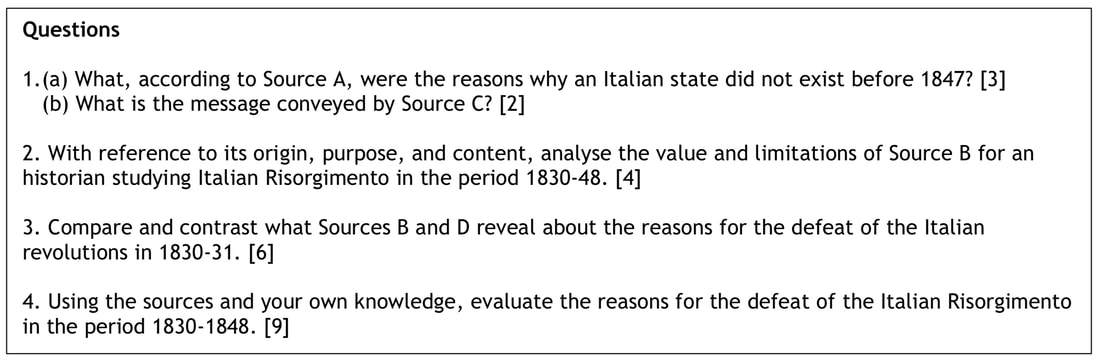
The Activity 
Picture

Useful further reading 
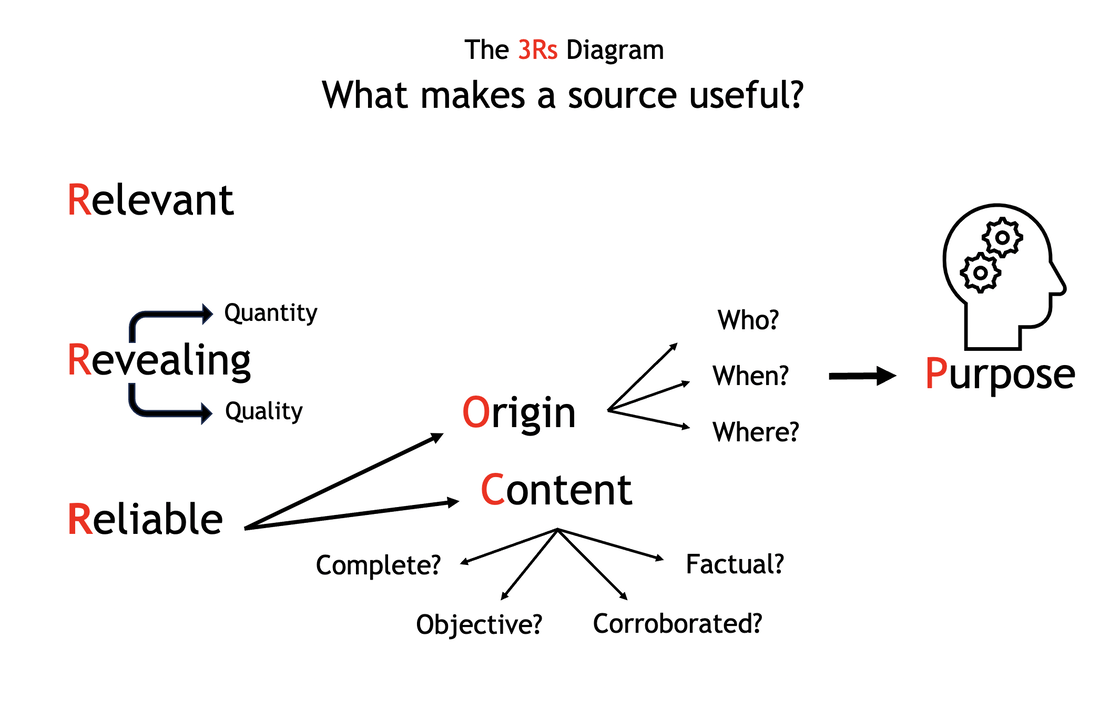
So what does make a source useful? Below the diagram for the lesson and (right) a link to some serious  thinking about utility.
Picture
Picture
The little brother of internationalschoolhistory.net - Richard Jones-Nerzic- Nyon, Switzerland 2026 
The views expressed on this website are those of the author and not necessarily endorsed by the author's employer. 
  • Home
  • Year 9
    • Unit 1 - Bronze Age Greece >
      • Lesson 1 - Minoa
      • Lesson 2 - Myths
      • Lesson 3 - Atlantis
      • Lesson 4 - The Mycenaeans
      • Lesson 5 - Troy
      • End of Unit Test
    • Unit 2 - Classical Greece >
      • Lesson 1 - Archaic Period
      • Lesson 2 - Olympics
      • Lesson 3 - Athens
      • Lesson 4 - Democracy
      • Lesson 5 - Sparta
      • Lesson 6 - Greek Gods
      • Lesson 7 - Greek Legacy
      • End of Unit Test - 2
    • Unit 3 - Roman Republic >
      • Lesson 1 - Foundation
      • Lesson 2 - Republic
      • Lesson 3 - Hannibal
      • Lesson 4 - Julius Caesar
      • Lesson 5 - Rome
    • Unit 4 - Roman Empire >
      • Lesson 1 - Empire
      • Lesson 2 - Roman Nyon
      • Lesson 3 - Pompeii
      • Lesson 4 - Rise and Fall
      • Lesson 5 - Legacy
    • Unit 5 - The early Middle Ages >
      • Lesson 1 - Middle Ages?
      • Lesson 2 - Christianity
      • Lesson 3 - Monasteries
      • Lesson 4 - Justinian
      • Lesson 5 - Islam
      • Lesson 6 - Vikings
  • Year 11
    • Warfare - A study through time >
      • Lesson 1 - Introduction >
        • Warfare - Timeline activity >
          • Students' Timelines 2020
      • Lesson 2 - Medieval >
        • Case Study - 1066 - Battle of Hastings
      • Lesson 3 - Crusades >
        • Case Study - 1271 - Krak des Chevaliers
      • Lesson 4 - New World >
        • Case Study - 1532 - Battle of Cajamarca
      • Lesson 5 - Religion >
        • Case Study - 1572 - St. Bartholomew's Day Massacre
      • Lesson 6 - Napoleon >
        • Case Study - 1796 - Battle of Lodi
      • Lesson 7 - Industrial >
        • Case Study - 1859 - Battle of Solferino
      • Lesson 8 - World War 1 >
        • Case Study - 1915 - The Battle of Ypres
      • Lesson 9 - 1930s >
        • Case Study - 1937 - Nanjing Massacre
      • Lesson 10 - Vietnam >
        • Case Study - 1968 - Tet Offensive
    • Matu 1 - The American Revolution >
      • Lesson 1 - The Scientific Revolution
      • Lesson 2 - The Enlightenment
      • Lesson 3 - Enlightened Monarchs
      • Lesson 4 - Colonising America
      • Lesson 5 - Thirteen Colonies
      • Lesson 6 - Boston Massacre? >
        • Boston Massacre - The Play
      • Lesson 7 - Short-term causes
      • Lesson 8 - Why Britain lost
      • Lesson 9 - Consequences
      • Lesson 10 - How revolutionary?
    • Matu 2 - The French Revolution >
      • Lesson 1 - Introduction
      • Lesson 2 - Causes SE
      • Lesson 3 - Causes CP
      • Lesson 4 - Short term causes
      • Lesson 5 - The Bastille
      • Lesson 6 - 1789-91
      • Lesson 7 - 1793 Execution
      • Lesson 8 - The Terror
    • Matu 3 - Switzerland and Napoleon >
      • Lesson 1 - Ancien Regime
      • Lesson 2 - 1789
      • Lesson 3 - Napoleon's Rise
      • Lesson 4 - Napoleon in Art
      • Lesson 5 - Napoleon's Reforms
      • Lesson 6 - Switzerland 1798-1815
      • Lesson 7 - Napoleon's Europe
      • Lesson 8 - Napoleon: Hero or villain
  • S1 S2
    • Matu 4 - Industrial Revolution >
      • Lesson 1 - Why was Britain First?
      • Lesson 2 - Economics - Agriculture
      • Lesson 3 - Economics - Industry
      • Lesson 4 - Transport
      • Lesson 5 - Social Impact
      • Lesson 6 - Cultural Impact
      • Lesson 7 - Political Impact
      • Lesson 8 - Switzerland
    • Matu 5 - Nationalism >
      • Lesson 1 - Impact of French Revolution
      • Lesson 2 - Napoleon and Vienna
      • Lesson 3 - 1815-48 - Age of Revolution
      • Lesson 4 - Italian Unification - 1830-48
      • Lesson 5 - Switzerland 1815-48
      • Lesson 6 - Italian Unification - 1848-70
      • Lesson 7 - German Unification - 1848-71
      • Lesson 8 - The German Empire
    • Matu 6 - New Imperialism >
      • Lesson 1 - New Imperialism?
      • Lesson 2 - Africa
      • Lesson 3 - Congo
      • Lesson 4 - China
      • Lesson 5 - Japan
      • Lesson 6 - Legacy
      • Jared Diamond thesis
    • Matu 7 - World War 1 >
      • Lesson 1 - Introduction
      • Lesson 2 - Causes
      • Lesson 3 - 1914
      • Lesson 4 - Expectations
      • Lesson 5 - Reality
      • Lesson 6 - Total War
      • Lesson 7 - Switzerland
      • Lesson 8 - Defeat
      • Lesson 9 - Peace 1919
    • Matu 8 - Russian Revolutions >
      • Lesson 1 - Russia before 1917 >
        • Tim Marshall - Russia
      • Lesson 2 - 1905 Revolution
      • Lesson 3 - February Revolution
      • Lesson 4 - Marxism
      • Lesson 5 - Lenin
      • Lesson 6 - The Bolsheviks
      • Lesson 7 - 1917-18
      • Lesson 8 - Civil War
    • Matu 9 - USA 1919-41 >
      • Lesson 1 - 1920s boom
      • Lesson 2 - Roaring 20s?
      • Lesson 3 - Crash
      • Lesson 4 - 1932 Election
      • Lesson 5 - New Deal
      • Lesson 6 - Judging the New Deal
    • Matu 10 - Totalitarian States >
      • Lesson 1 - Modern Authoritarianism >
        • Is Trump's USA authoritarian?
      • Lesson 2 - Fascism
      • Lesson 3 - Mussolini - Rise to Power
      • Lesson 4 - Mussolini - Consolidation of Power
      • Lesson 5 - Mussolini - Aims and policies
      • Lesson 6 - Research presentations >
        • Hitler - Research presentations
        • Stalin- Research presentations
      • Lesson 7 - Hitler - Germany 1933-45 >
        • Hitler - Rise to Power
        • Hitler - Consolidation of Power
        • Hitler - Aims and policies
      • Lesson 8 - Stalin - USSR 1924-41 >
        • Stalin - Rise to Power
        • Stalin - Consolidation of Power
        • Stalin - Aims and policies
    • Exams and Revision
  • S3
    • Matu 11 - World War II >
      • Lesson 1 - WW1
      • Lesson 2 - LoN
      • Lesson 3 - Hitler
      • Lesson 4 - Appeasement
      • Lesson 5 - 1939-40
      • Lesson 6 - Japan
      • Lesson 7 - Russia
      • Lesson 8 - Total War
      • Lesson 9 - Defeat
      • Lesson 10 - Switzerland
    • Matu 12 - The Cold War >
      • Lesson 1 - Causes
      • Lesson 2 - Berlin
      • Lesson 3 - 1950s
      • Lesson 4 - 1960s
      • Lesson 5 - 1970s
      • Lesson 6 - 1980s
    • Matu 13 - Decolonisation and the Third World >
      • Lesson 1 - Factors
      • Lesson 2 - Case studies
      • Lesson 3 - Consequences
    • Matu 14 - Switzerland >
      • Swiss Politics
      • Swiss History
    • Exams and Revision
  • IB History
    • IB History - Paper 1 >
      • IB History - Paper 1 - Content
      • IB History - Paper 1 - Past paper questions >
        • Question 1a
        • Question 1b
        • Question 2
        • Question 3
        • Question 4
      • IB History - Paper 1 - Skills
    • IB History - Paper 2 >
      • IB History - Paper 2 past paper questions
      • IB History - 7. Industrialization >
        • IB History - Past paper questions - Industrialization
        • IB History - First and Second Industrial Revolution
        • IB History - Steven Johnson
        • Activity 1
      • IB History - 8. Independence movements >
        • IB History - Past paper questions - Independence movements
        • IB History - Revision Template - Independence movements >
          • IB History - Independence movements - Theme 1 - Origin and rise
          • IB History - Independence movements - Theme 2 - Methods
      • IB History - 10. Authoritarian States >
        • IB History - Emergence of authoritarian states
        • IB History - Consolidation and maintenance
        • IB History - Aims and policies
        • IB History - Past paper questions - Authoritarian states
        • IB History - Revision Template - Authoritarian states >
          • Hitler - Germany and Castro - Cuba - A comparative analysis (Part 1)
          • Hitler - Germany and Castro - Cuba - A comparative analysis (Part 2)
          • Hitler - Germany and Castro - Cuba - A comparative analysis (Part 3)
      • IB History - 11. Warfare >
        • IB History - Past paper questions - Warfare
      • IB History - 12. Cold War >
        • IB History - Past paper questions - Cold War
        • IB History - Revision essay plans - Cold War >
          • Cold War - 1943-49 - Rivalry, mistrust and accord
          • Cold War - 1947-79 - Rivalry, mistrust and accord
          • Cold War - 1980-91 - Rivalry, mistrust and accord
          • Cold War - Leaders, nations and Cold War crises.
    • IB History - IA - Internal Assessment
  • TOK
    • Critical Thinking >
      • Lesson 1 - Thinking >
        • Lesson 1 - Test
      • Lesson 2 - Language
      • Lesson 3 - Senses
      • Lesson 4 - Reason
      • Lesson 5 - Emotion
      • Assessment >
        • Movie perception test
        • Complete film
        • Student Films 2021
    • Core theme - Knowledge and the knower >
      • Knowledge framework
    • Areas of Knowledge >
      • History >
        • Scope in history
        • Method and perspective in history
        • Ethics in history
      • Human Science >
        • Scope in human science
        • Method and perspectives in human science
        • Ethics in human science
      • Natural Science >
        • Scope in natural science
        • Method and perspectives in natural science
        • Ethics in human science
      • Maths >
        • Scope in maths
        • Method and perspectives in maths
        • Ethics in maths
      • Arts >
        • Scope in the arts
        • Method and perspectives in arts
        • Ethics in the arts
      • Politics >
        • Scope in politics
        • Method and perspectives in politics
        • Ethics in politics
      • Technology >
        • Scope in technology
        • Method and perspectives in politics
        • Ethics in technology
      • Language >
        • Scope in language
        • Method and perspectives in language
        • Ethics in technology
    • Assessment >
      • TOK Exhibition >
        • TOK Exhibition 2023
        • TOK Exhibition 2024
        • TOK Exhibition 2025
      • Essay
  • Film Workshop
  • About